Noryageur, A Genuine Sheepskin Rug Retailer in the USA.
✔ Rare, Large Natural Sheepskins – Eco-Tanned
✔ Ships Within 1 Business Day
✔ Independently Owned & Operated in the USA
✔ Transparent Sourcing & Origins
✔ No Marketing Emails. No Gimmicks.
The Largest Selection of Natural Sheepskins in the USA – Each One Individually Photographed
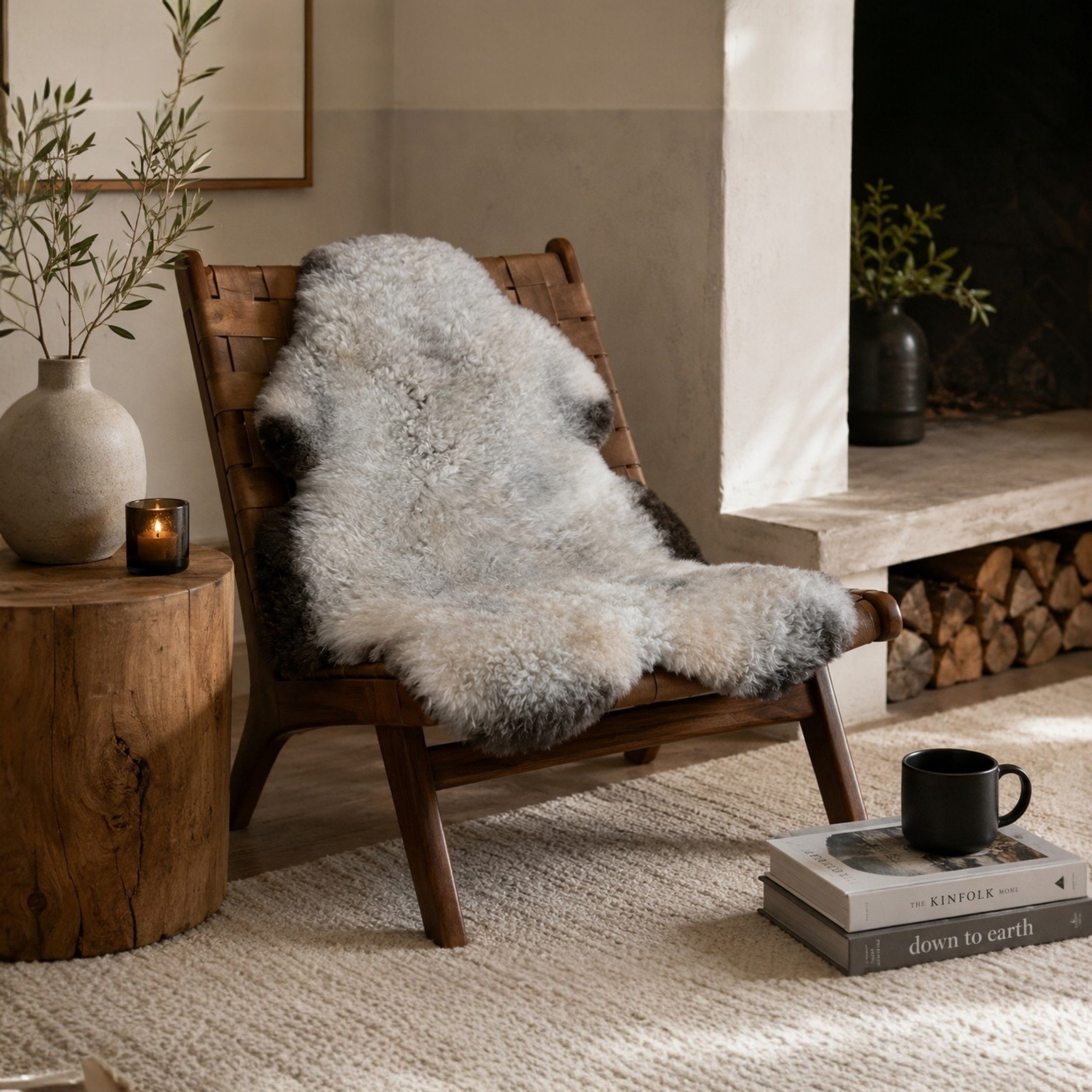
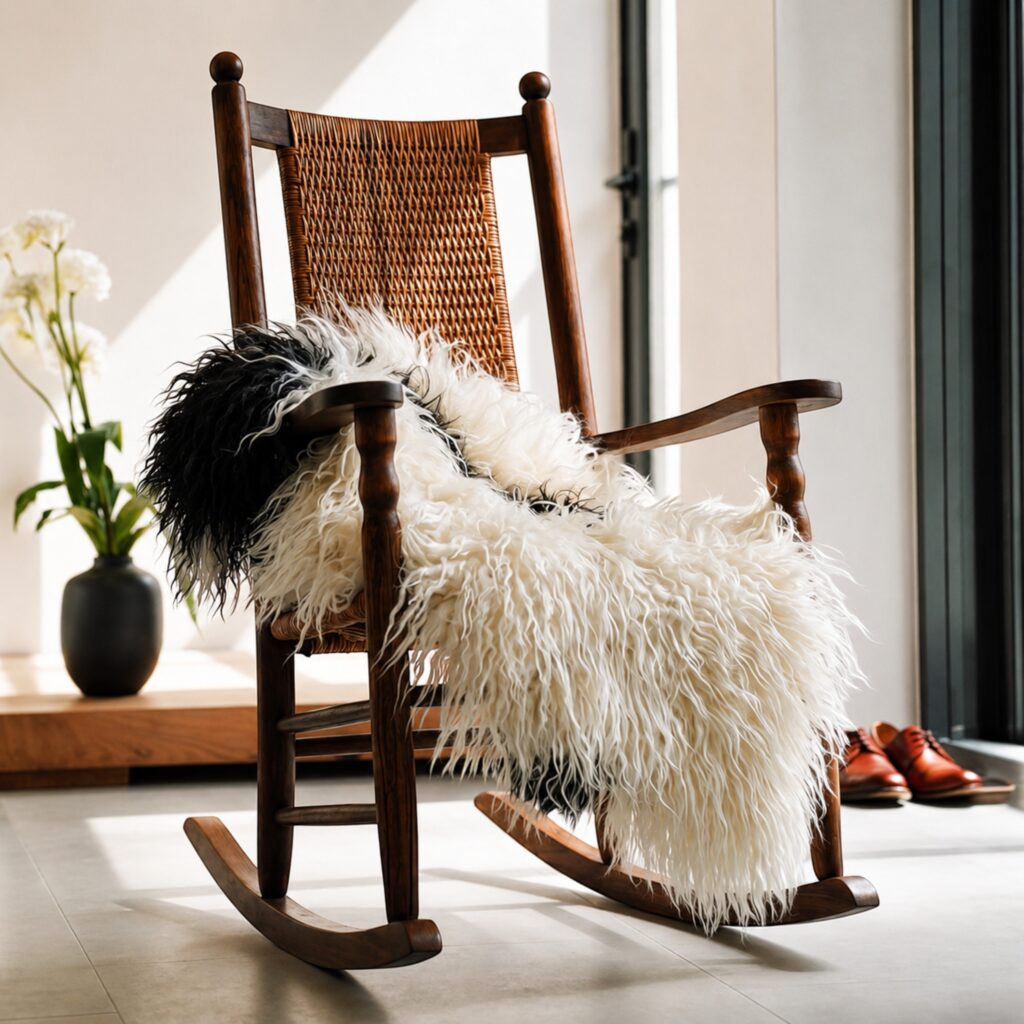
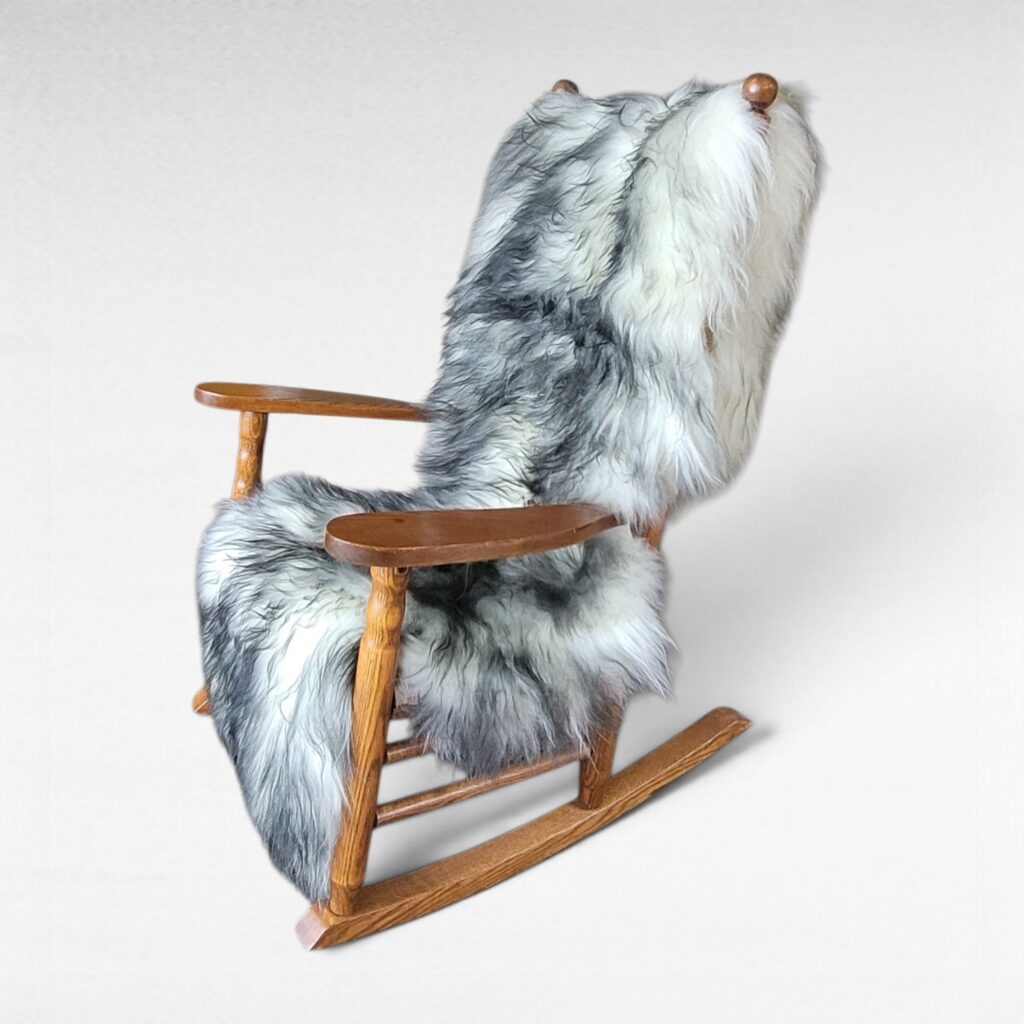
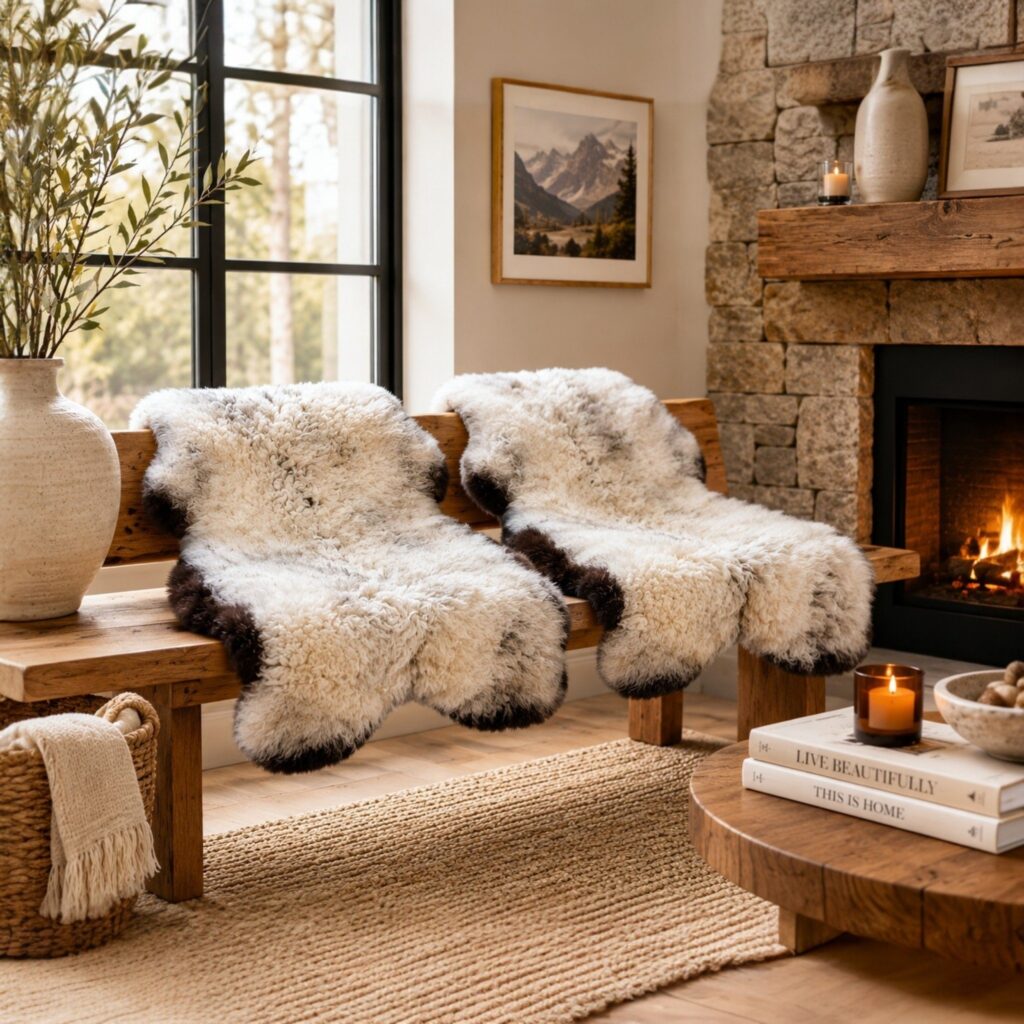
Discover genuine sheepskin and lambskin rugs crafted for warmth, elegance, and lasting comfort. Every piece is luxuriously soft with its own unique texture and natural coloring, perfect for your floor or as a cozy throw.
Our sheepskins are eco-tanned without harmful chromium, using processes that meet strict European Union environmental standards – more rigorous than U.S. regulations.
Browse our collection to find the perfect piece that brings natural beauty and sophistication to your home.
Sheepskins by Type
Sheepskin FAQs

What is a Genuine Sheepskin Rug?
A genuine sheepskin rug is a tanned and preserved skin of a sheep with the wool still attached, these rugs have been cherished for centuries, prized for their versatile insulation properties.
Terminology: All the Same Thing
Sheepskins rugs are also referred to in many different ways, but they’re all the same, a tanned and preserved skin of a sheep with the wool still attached.
Sheep pelt / Sheepskin hide Sheepskin / Sheep skin Sheepskins / Sheepskin skins Sheepskin rug / Lambskin rug
Natural Sheepskin Colors
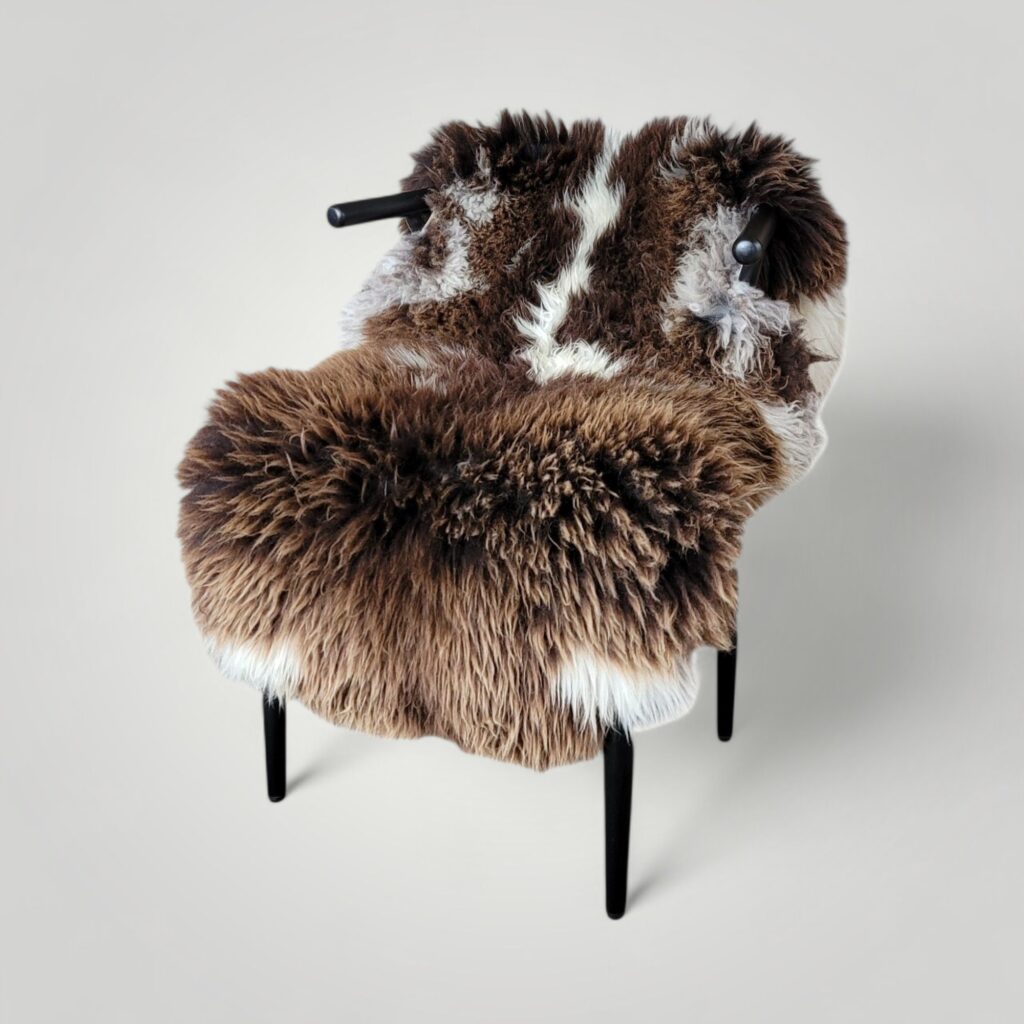
Natural sheepskins display a variety of colors and patterns, as shown in the photographs. However, the appearance of your sheepskin may look slightly different in person due to your home’s lighting and surrounding colors such as your walls, floors and upholstery colors.
Colors found in Natural Sheepskin:
Natural sheepskins have warm tones including cream, white, gray, black, brown, butter yellow, and tan. A hide may show all of these colors or have a blend of several colors all at once.
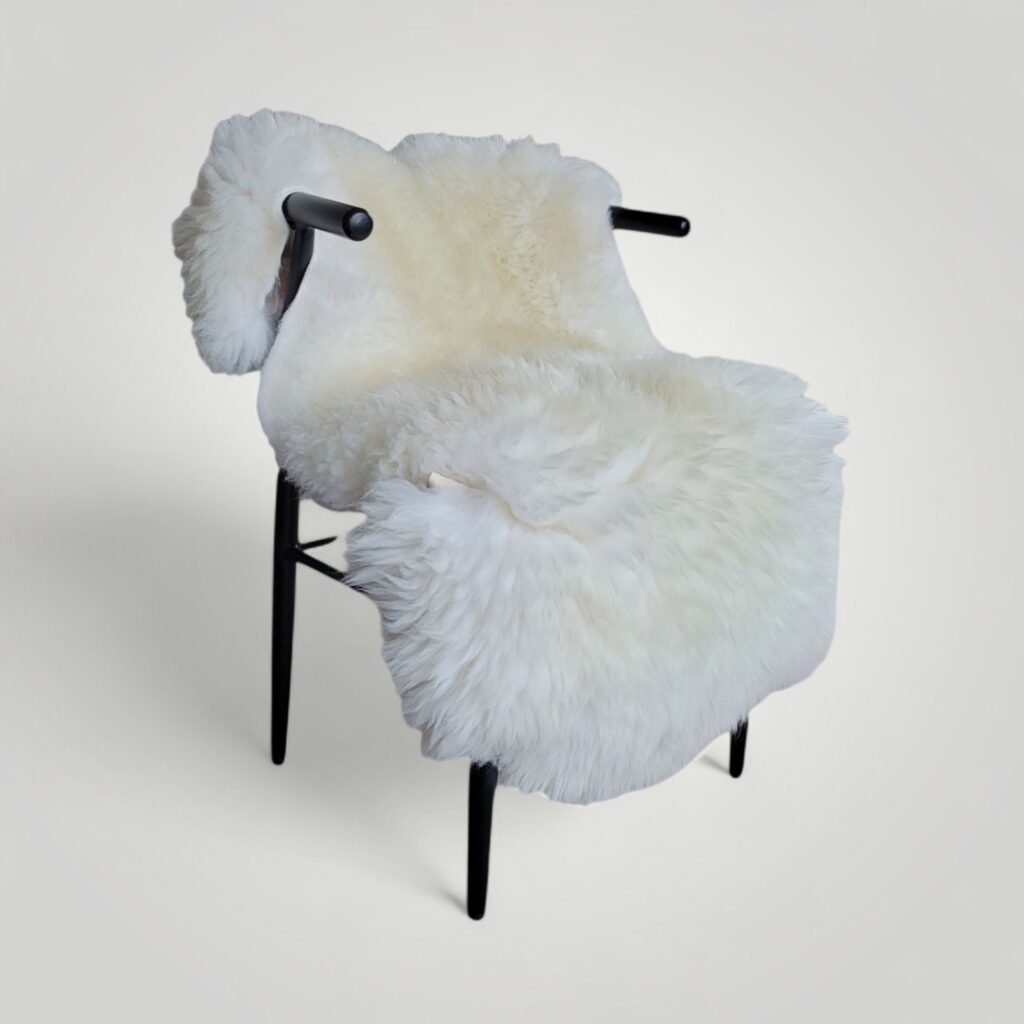
White Sheepskins: White sheepskins are never pure white and do not resemble artificial white in any way. Instead, they range from cream to ivory tones, and many retain the sheep’s lanolin which is present in the wool wool which creates a yellowish tint.
Black Sheepskins: Black sheepskins range from jet black to dark brown black with red undertones and infrequently with a few gray hairs.
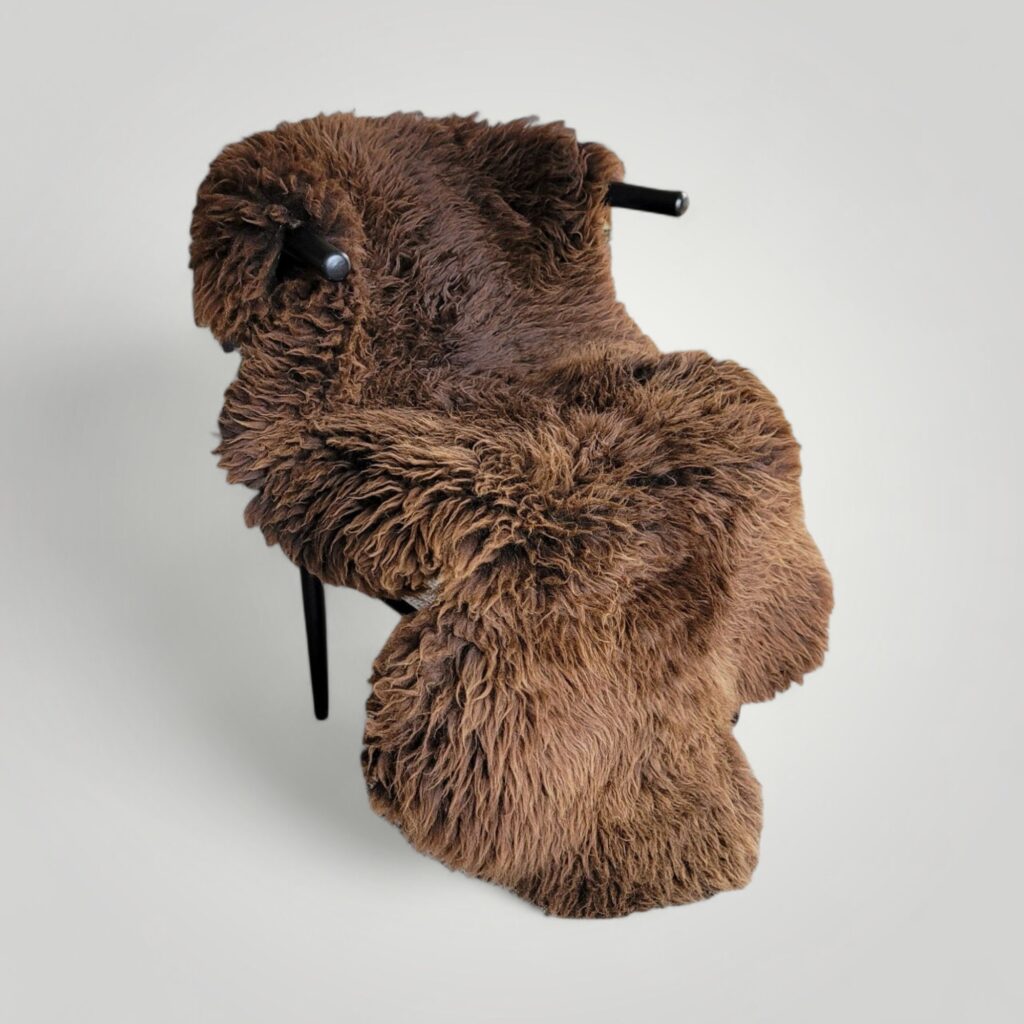
Brown Sheepskins: Brown sheepskins come in many different shades from light brown all the way to a dark chocolate brown and everything in between! Some skins also display several different brown tones in a single hide.
Why don’t you sell dyed sheepskin rugs?
We’ve made an intentional choice not to offer dyed sheepskins.
The 3 main reasons:
Environmental Impact: Applying dye to sheepskins is one of the most environmentally harmful processes in the tanning process. Dying sheepskins adds a significant amount of toxic chemicals into the environment.
Color Fades overtime: Dyed sheepskins slowly lose their color over time and it’s accelerated when the sheepskin is exposed to sunlight when it shines through your windows. Natural sheepskins maintain their beauty without worrying about them losing their color.
Dyed sheepskins can stain your clothes and furniture: Dyed sheepskins can bleed color and even transfer onto your furniture, upholstery, and clothing, potentially staining valuable items!
What does the fur of a sheepskin feel like?
The texture of a sheepskin varies between each hide, this is why we provide descriptions for each pelt helping you find the perfect hide for your needs. Our genuine sheepskins don’t have that rough, scratchy texture you might associate with old wool sweaters (unless specifically labeled as coarse).
Most of our sheepskins range from silky soft to very soft, some have a slightly more woolly softness. After all, it is natural wool! The texture typically depends on factors like the sheep’s breed, environment it lived in and age.
.
What is a natural sheepskin?
What Does “Natural Sheepskin” Mean?
“Natural sheepskin” is one of the most misunderstood and misused terms in the industry. In the context of animal pelts, “natural” specifically indicates that the hide has not been altered with dyes, bleaches, or any other color-modifying treatments—it retains its original, authentic color straight from the sheep.
If a sheepskin has been pointed, dyed, bleached, or artificially colored in any way, it is not natural and shouldn’t be labeled or marketed as such.
Our Commitment to Natural Sheepskin
We exclusively offer natural sheepskins—nothing else. Every sheepskin in our collection showcases the hide’s true, unaltered colors and patterns as nature intended. This commitment means you’re getting an authentic product free from chemical dyes and artificial treatments, allowing you to enjoy the sheepskin’s genuine beauty, unique characteristics, and natural variations. When you purchase from us, you can trust that you’re receiving a truly natural sheepskin every time.
How do you measure your hides?
Sheepskin rug dimensions are measured manually and represent approximate sizes. Following industry-standard practices, measurements are taken diagonally across the wool side of the hide, capturing the widest and longest points to determine the width and length.
Visual Measurement Guide
We provide photographs showing exactly how we measure each sheepskin, so you can see our process for yourself. These images not only demonstrate our measuring technique but also give you a helpful visual reference for estimating the wool length on each hide. By examining these measurement photos, you’ll gain a better understanding of both the sheepskin’s overall size and the approximate depth of its wool pile.
Sheepskin Thickness and Density
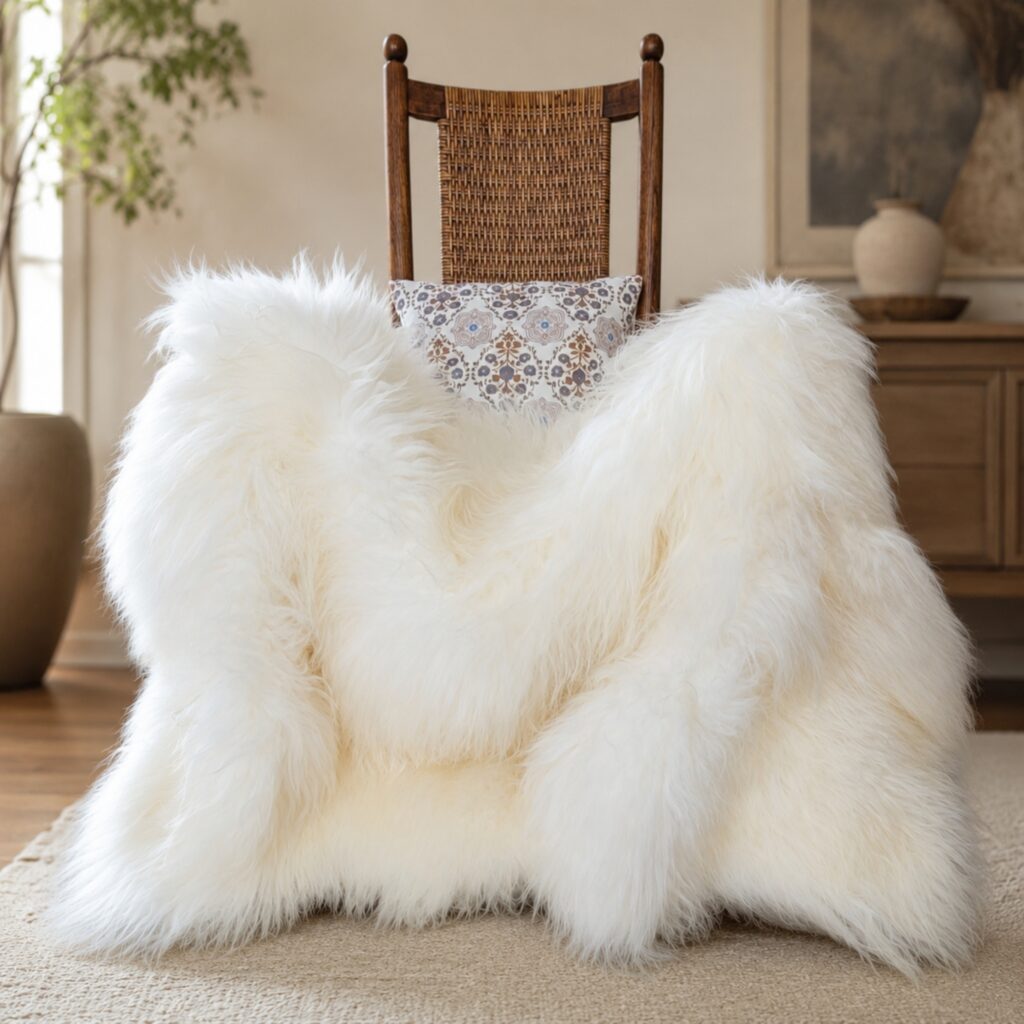
Every sheepskin rug is truly one-of-a-kind. Because these are natural hides rather than factory-made products, no two will ever be identical. To help you compare the thickness and density of our sheepskins, we’ve developed a unique demonstration method.
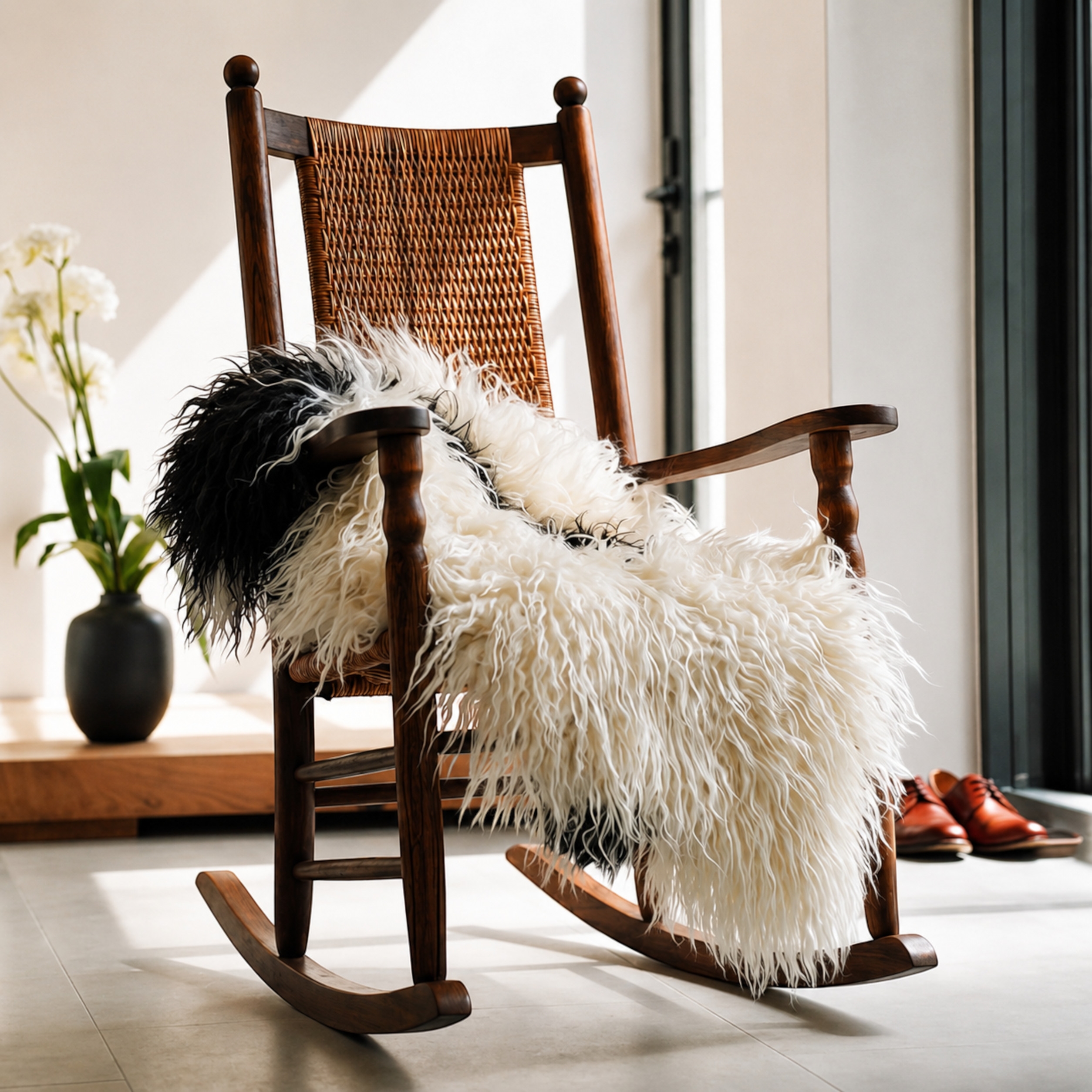
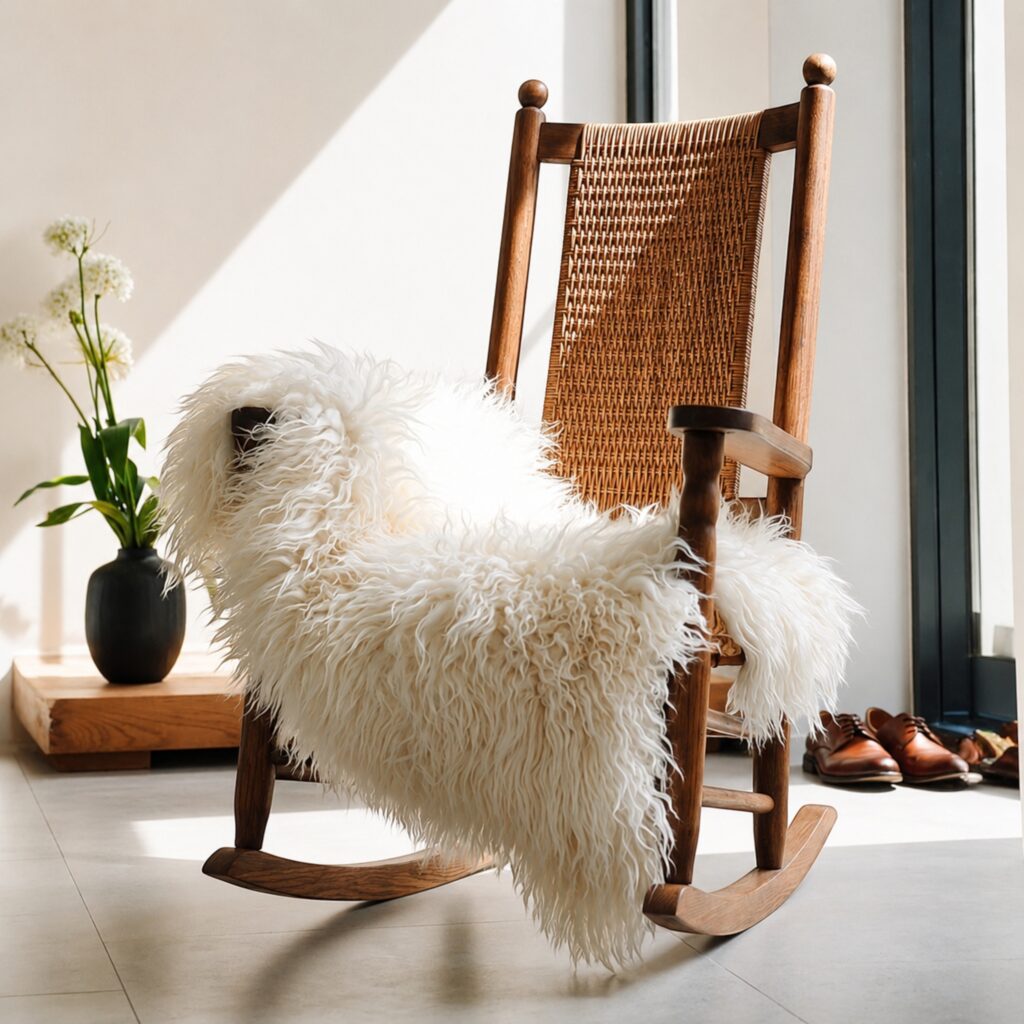
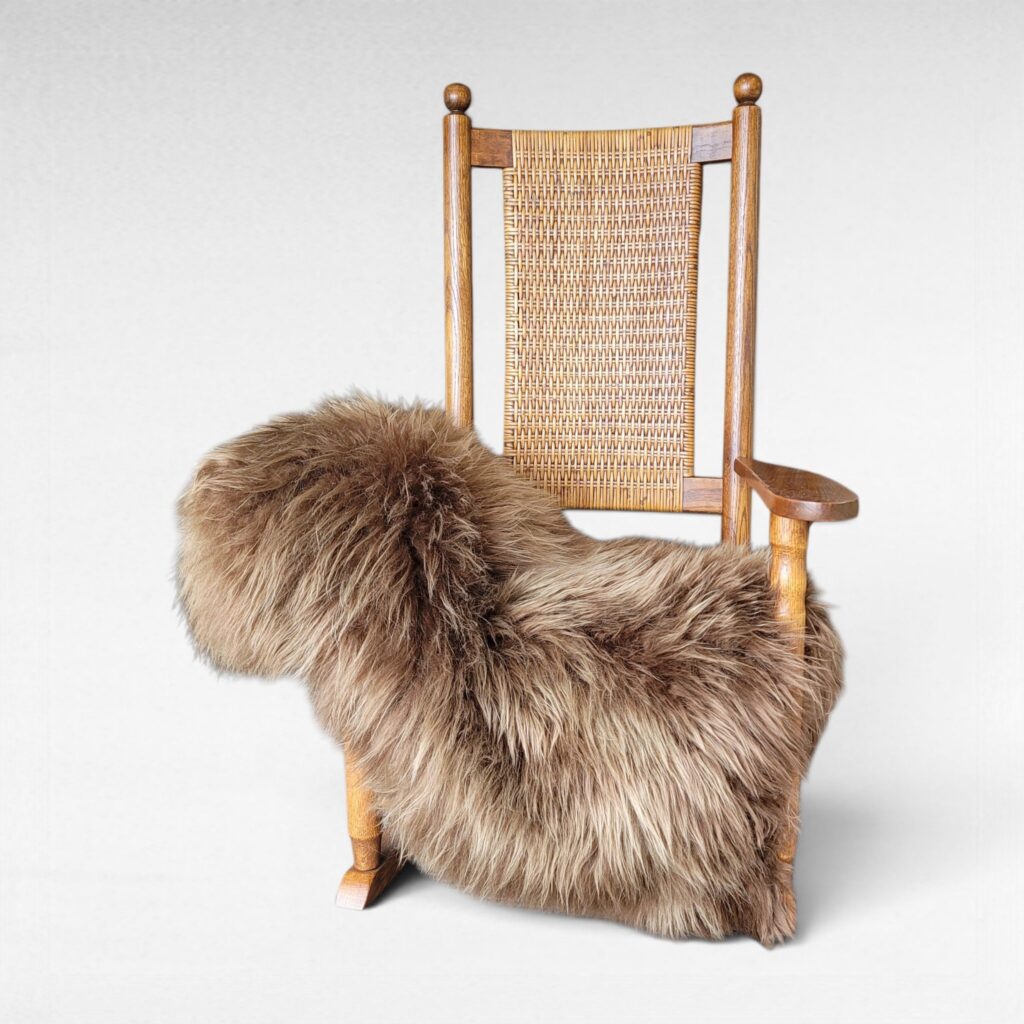
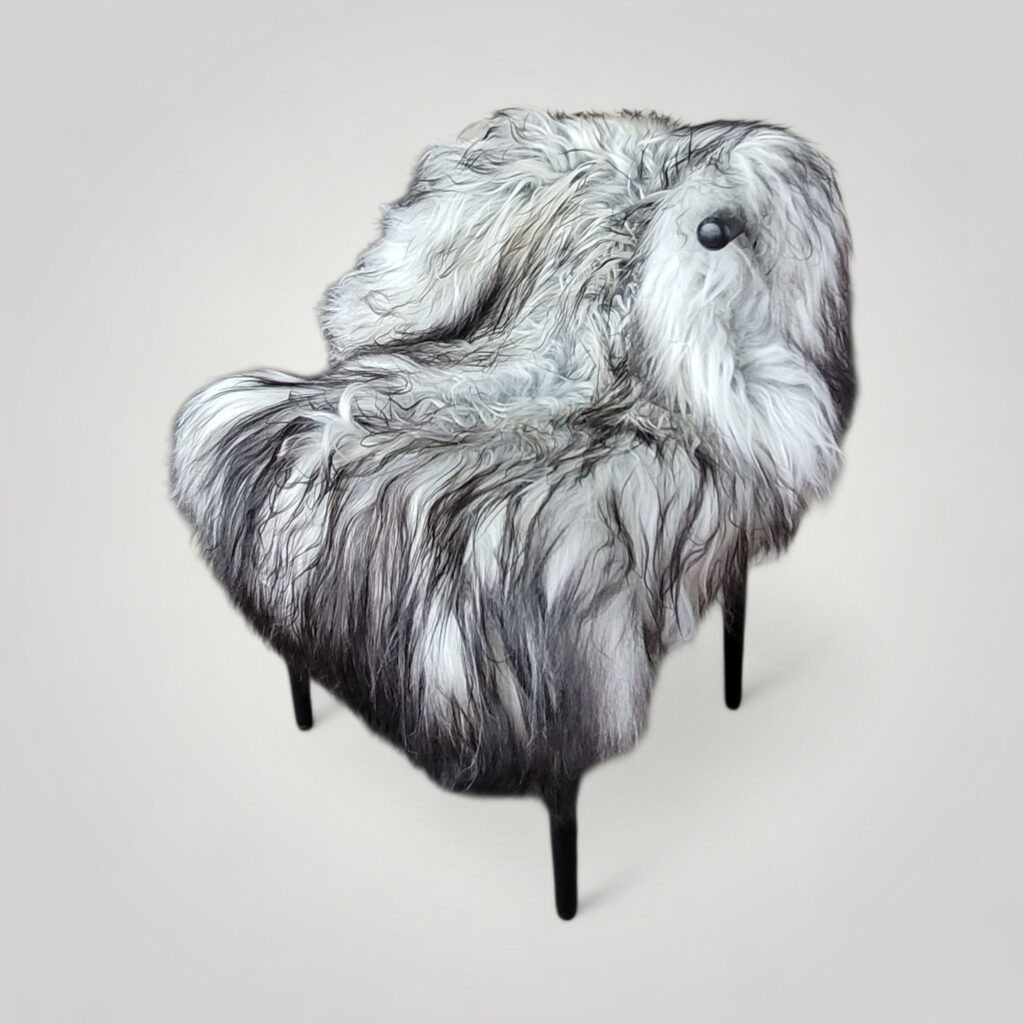
We fold each sheepskin pelt in half, then gather it into three folds and place it on a chair. This visual comparison allows you to see how sheepskins of similar sizes stack up against each other in terms of their bulk, density, and overall volume—giving you a clearer sense of each hide’s substantial quality and feel.
Bald spots on hides?
Please be aware that all sheepskins feature shorter wool around the perimeter edges. This is because sheep naturally have shorter hair on their underside and belly areas. While some sheepskins with longer overall wool may conceal these edges better than others, this characteristic is typically visible to some degree on every hide.
These shorter-haired areas are not bald spots or defects—they’re a completely natural feature of an authentic animal pelt. This is simply how the wool grows on a living sheep, and it’s one of the many authentic characteristics that confirm you’re receiving a genuine, natural sheepskin.
Do sheepskins shed wool?
Shedding varies from sheepskin to sheepskin—some have no shedding at all, others may shed slightly, and a few shed more initially. The good news is that any shedding is temporary and will stop over time; it doesn’t continue indefinitely.
The majority of our sheepskins have minimal to no shedding, and we take care to thoroughly brush each one before shipping it to you. Chair pads and stitched rugs may experience slightly more initial shedding since cutting the hide edges can loosen some fibers, but this too will subside with use.
What does the backside of a sheepskin rug look like?
The backside of a sheepskin rug features a suede finish. Since these are “single face sheepskins,” we don’t expect the suede side to be flawless—it’s a natural leather surface with authentic characteristics. Each sheepskin is hand-trimmed, which means the shape and edge finish will vary from hide to hide.
Our sheepskin hides come exclusively from meticulously cared-for livestock. Each piece is “perfectly imperfect” by design—these are natural pelts created by nature, not manufactured products. The variations and markings you see are proof of authenticity and part of what makes each sheepskin genuinely unique.
How do I clean my sheepskin rug?
Cleaning Instructions for Our Sheepskin Rugs
Please note that these cleaning guidelines are specifically for sheepskins purchased from us. Other retailers may provide different instructions, but for your Noryageur sheepskin rug, please follow only the care methods outlined below.
Important Reminder: Just as you would never submerge your fine Italian leather jacket in water, you should avoid soaking the leather backing of your sheepskin. The hide requires gentle care to maintain its quality and longevity.
For Deep or Extensive Cleaning:
If your sheepskin needs a thorough, comprehensive cleaning, we recommend having it professionally dry cleaned. Alternatively, you can learn to clean it yourself at home by visiting this excellent tutorial: https://cleaninghow.to/the-step-by-step-guide-to-easily-clean-your-sheepskin-rug/
(This resource is not affiliated with us, but it provides an outstanding step-by-step guide that we highly recommend!)
Regular Maintenance
For Daily Use (by you or pets): Shake and brush your sheepskin monthly or weekly to maintain its beautiful appearance and keep it fresh.
For Occasional Use (accent pieces or light use): Shake and brush periodically to preserve its look and freshness.
Airing Out: We recommend hanging your sheepskin outside to air out, especially during cold weather. A few hours of fresh air does wonders for revitalizing the fleece.
Large Area Rugs: If possible, carefully shake out and air your large sheepskin rugs periodically. If this isn’t feasible, vacuum weekly using the suction-only setting (no beater bar or rotating brush).
Spot Cleaning
For periodic spot cleaning, use a no-rinse wool wash diluted in a spray bottle. Spray the solution over the entire wool surface or just the area needing attention, then gently wipe in one direction. Never rub or scrub the wool when wet—this can damage the fibers and mat the fleece.
After spot cleaning, hang your sheepskin to dry in a warm, airy location with shade. Never place it near a hot stove or in direct sunlight, as excessive heat can damage the leather.
Annual Deep Cleaning
Once a year during spring cleaning, we clean all our sheepskin fleece using Kookaburra Wool Wash or a similar wool-safe product to keep them looking their best.
Where do your sheepskins come from?
European Sheepskins
The majority of our sheepskins come from European countries with rigorous environmental, labor, and health standards—regulations that are actually more stringent than those in the United States. We partner with small, family-run tanneries that have been operating for generations.
Mutton and lamb are dietary staples throughout much of Europe, which means sheepskin pelts are readily available as by-products of the meat industry. These hides would otherwise be discarded, and we’re committed to a zero-waste philosophy by giving them new purpose.
Europe’s climate is ideal for raising sheep and lambs. The animals graze freely on open land rather than being confined to feedlots. This natural, pasture-based lifestyle results in exceptionally clean wool.
Our European sheepskins are acquired from several countries in Europe including the Netherlands, Sweden, Switzerland, Germany, Iceland and England each offering totally unique qualities.
Asian Sheepskins
We offer select sheepskins native to China, including fleece from the rare Tibetan sheep (also known as Mongolian lambskins). These sheep are raised free-roaming in open pastures, and all pelts are by-products of the meat industry—not harvested solely for decorative purposes. These skins are some of the softest lightest weight fluffy fur hides around! Mongolian sheepskins are among my personal absolute favorite when used as garments and as luxury throws due to their feather-lite weight, each hide only weighing approximately 8oz.
Are sheepskin rugs ethical?
Sheepskin rugs are more than just a decorative choice—they represent a centuries-old tradition of utilizing natural resources to provide warmth and comfort in harsh climates. The question of whether these rugs are ethical is one that deserves thoughtful consideration, and the answer involves multiple factors.
Why We Believe Our Sheepskins Are Ethical and Sustainable:
Natural Living Conditions: The sheep are born and raised freely on open pastureland, living naturally until they’re gathered. They don’t experience the stress of confinement in barns or cramped fencing—they enjoy a quality of life that respects their natural behavior.
Multi-Purpose Animals: Sheep provide numerous valuable natural products including fiber (wool), meat, milk, and lanolin. They’re versatile animals that serve many purposes throughout their lives.
Zero-Waste By-Product: Sheep are not raised or slaughtered for their pelts. Sheepskins are by-products of the meat industry—hides that would otherwise be discarded as waste. By transforming these pelts into beautiful, functional rugs, we’re honoring the animal’s life by ensuring nothing goes to waste.
This approach aligns with sustainable practices and responsible resource management, making our sheepskins both an ethical and environmentally conscious choice.
Real Authentic Genuine Sheepskins vs. their faux counterparts?
Real Authentic Sheepskins vs. Faux Alternatives
The Undeniable Environmental Facts
Genuine sheepskins are renewable, eco-friendly, recyclable, reworkable, biodegradable, and kind to the earth—especially natural sheepskins without chemical dyes. To put this in perspective, I own a vintage genuine sheepskin B3 bomber jacket that’s over 40 years old and still looks fantastic! In contrast, a faux leather jacket typically won’t survive more than a season or two before splitting, cracking, and flaking apart.
The Plastic Problem
Faux fur is made from plastic—full stop. Plastic and microplastic pollution is one of the most serious environmental crises facing our planet today. When you discard that cheap faux fur purchase, it will take thousands of years to break down, if it ever does at all. A quick online search will reveal the devastating scope of this problem.
The Faux Leather Reality
Faux leather contains 50-70% urethane to bind together whatever trendy base material is currently popular (apple leather, mushroom leather, etc.). Urethane is a toxic substance that falls between plastic and rubber in composition. There’s a reason many states have banned urethane floor finishes—it’s harmful.
The True Cost
While it’s true that no animals are directly harmed in producing faux products, the reality is that these alternatives harm animals, humans, and the environment in the long run. The lasting damage to our planet is immeasurable since faux furs and leathers are non-biodegradable yet have extremely short lifespans.
Longevity Matters
Faux fur and leather typically last only one season, while a well-cared-for genuine sheepskin product will serve you beautifully for years, even decades. Quality and sustainability go hand in hand.
Terms used interchangeably
Industry Terminology: Understanding the Names
The sheepskin industry uses many terms that all refer to the same product. You may encounter any of these names: sheep pelt, sheep hide rug, sheep fur rug, sheepskin rug, shearling rug, sheepskins, sheep skin, lambskin rug, and sheep fleece rug.
Despite the variety of names, all these terms describe the same thing: a tanned and preserved sheep skin with the wool still attached to the hide.
Do sheepskin rugs have odor, if so what do they smell like?
Do Sheepskin Rugs Have an Odor?
All sheepskin rugs have a natural scent that comes from their organic origin. Just like jute, a leather jacket, or a damp wool sweater, sheepskin carries its own distinctive aroma. Interestingly, the scent varies depending on where the sheep originated, largely influenced by their diet and environment.
Some of our sheepskins receive a final rinse with lightly scented shampoo during the tanning process. Over 99% of our customers find the natural scent pleasant and enjoyable.
What Does Sheepskin Smell Like?
The scent experience varies based on individual perception, familiarity with natural materials, and your home’s climate conditions.
Common descriptions include:
Light Shampoo Fragrance: Especially noticeable on freshly tanned sheepskins. Some of our sheepskins, like Holland Sheepskins and Gotland X Sheepskins, are not deodorized at all and have zero added scent. These retain the authentic sheepskin aroma—a natural combination of wool, leather, and lanolin. The intensity varies depending on each sheep’s natural oils.
Lanolin Scent: The natural oils present in sheep’s wool create a distinctive earthy aroma.
Farm-Fresh Aroma: Some people describe a light “sheepy,” farmy, or barnyard scent. This is most noticeable in humid home environments without climate control, particularly during hot summer months when humidity exceeds 60%.
Important Note: The scent is strongest when you first unpack your sheepskin, as it has been enclosed in a box with plastic packaging during shipping. Airing it out will significantly reduce the initial intensity.
First time Buyer?
If you’re feeling uncertain, overwhelmed, or unsure where to start, we strongly encourage you to reach out before making your purchase. Let us know your specific needs and expectations—whether it’s a particular thickness, level of softness, intended use, or any other preferences you have in mind.
We’re committed to helping every customer find exactly what they’re looking for and ensuring you have a positive shopping experience from start to finish. Contact us at noryageur@gmail.com—we’re here to help!